SaaS
What is HighLevel SaaS Mode?
The practical answer
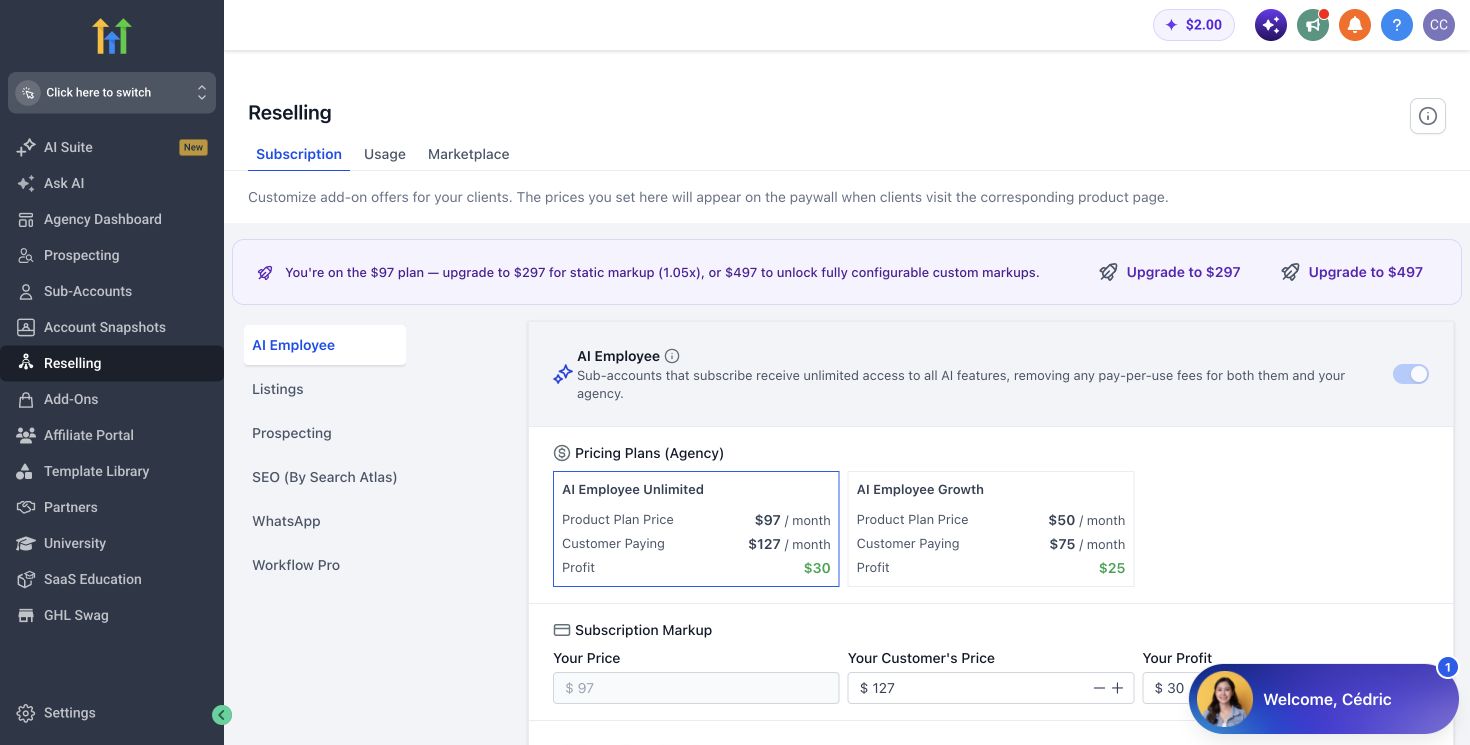
SaaS Mode is the Agency Pro operating layer for selling configured access to HighLevel as a recurring offer. The agency creates plans, connects supported billing, controls entitlements and can automate sub-account creation after purchase. Customers receive the package and branding defined by the agency; they are not buying an independent HighLevel agency account.
Turn this part of the decision into a written acceptance test for “What is HighLevel SaaS Mode?”. Record the baseline, expected change, named owner and evidence required to approve it. The test should cover activation, platform allocation, usage, payment fees, onboarding, support, retention and exit. Use representative records and normal operating volume, not an ideal demonstration account. Record assumptions separately from verified behaviour so a pricing or product change can be reviewed without rewriting the conclusion.
The trade-off
A plan should describe a customer outcome and operating boundary, not expose the entire HighLevel feature list. Define the niche, locations, users, channels, workflows, included usage, support response, onboarding work and integrations. Decide which settings customers may change and which remain governed centrally. Fewer clear packages are easier to sell, provision and support than many arbitrary feature combinations.
Test the recommendation with a normal case, a high-volume case and one failure case. For this question, the review should include activation, platform allocation, usage, payment fees, onboarding, support, retention and exit. Assign every exception to a person, define the response time and preserve a safe manual route. Capture the actual time, cost and outcome. If the process succeeds only with builder intervention or perfect data, it is not ready for wider deployment.
How to decide
Map the complete lifecycle before accepting payment. Test checkout, taxes and descriptors, account creation, snapshot application, domains, sender setup, user invitation, first login and the first useful workflow. Then test failed payment, retry, plan change, suspension, cancellation, export and deletion. Automated provisioning is valuable only when each exception has an owner and the customer is never stranded between billing and access.
How to decide
Model the economics per active paying account. Include Agency Pro, shared add-ons, wallet-funded communication and AI, payment fees, onboarding, support, recurring fulfilment, refunds, bad debt and retained specialist tools. Separate first-month cash from recurring contribution and measure churn by cohort. Marking up usage can create revenue, but it also creates price communication, support and collection obligations.
How to decide
SaaS Mode is a good fit when one repeatable journey solves a recurring problem for a defined segment and the agency can deliver first value consistently. It is a weak fit when every client needs a custom build, support is unlimited, the critical function lives in another specialist product or no one owns customer success. Pilot a small cohort, measure activation, support minutes, usage, retention and contribution at 30, 60 and 90 days, then scale only if normal customer behaviour preserves the promised margin.
How to verify this answer
What we checked
The answer is checked against the primary sources listed below and distinguishes published product facts from our operational judgement.
What can vary
Availability, limits, usage charges and interface details can vary by plan, country, account configuration and release date.
What to test yourself
Reproduce the recommendation with one representative workflow and your own data before changing a live system or buying annually.
Sources checked
Product capabilities and prices can change. These primary sources were checked for this analysis.
GHLFAQ