SaaS
Can you white-label HighLevel?
The practical answer
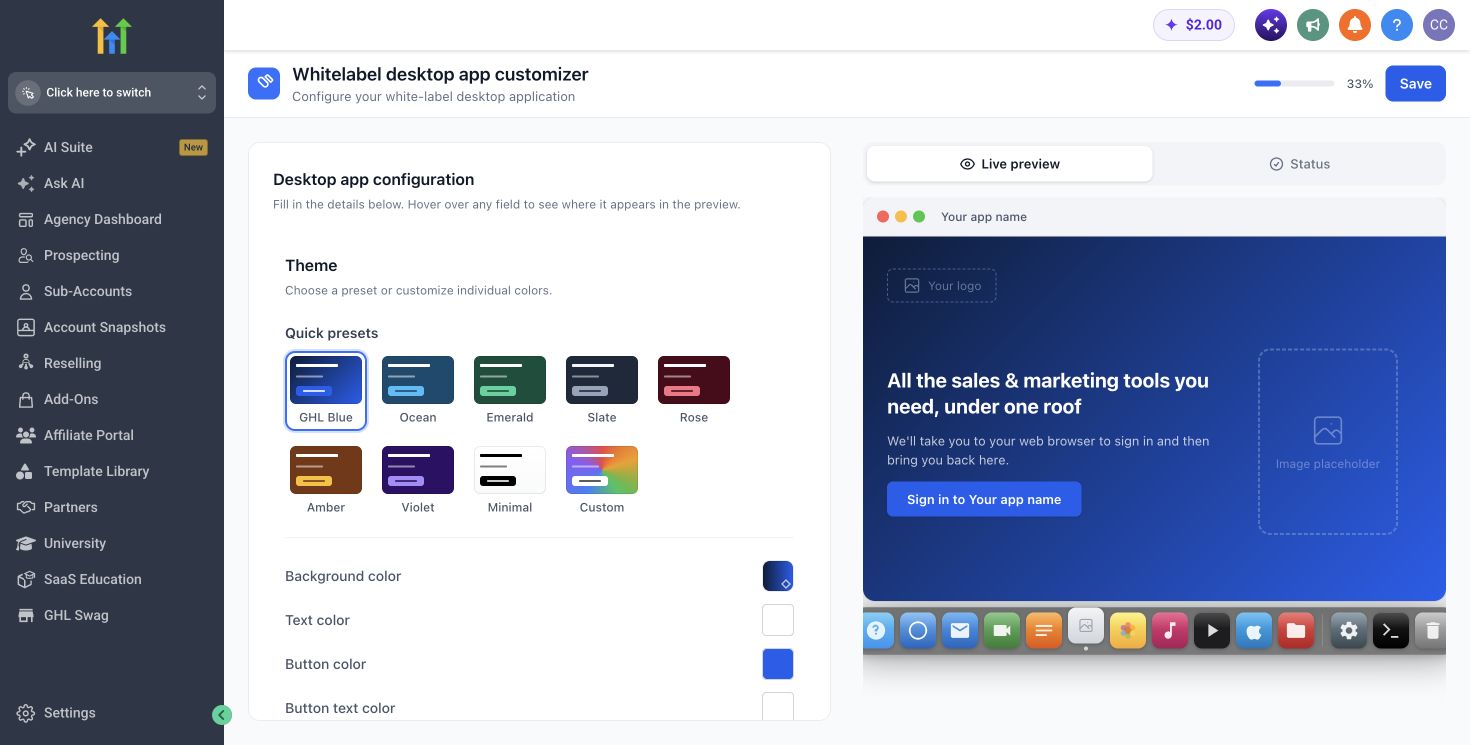
HighLevel can present several client-facing surfaces under an agency's identity, including supported domains, logos, colours and selected desktop or mobile experiences. The exact controls depend on the plan, product and app option. Agency Pro adds the SaaS packaging and provisioning layer, but white label is a collection of configurable touchpoints rather than one switch that removes every reference to the underlying platform.
Turn this part of the decision into a written acceptance test for “Can you white-label HighLevel?”. Record the baseline, expected change, named owner and evidence required to approve it. The test should cover activation, platform allocation, usage, payment fees, onboarding, support, retention and exit. Use representative records and normal operating volume, not an ideal demonstration account. Record assumptions separately from verified behaviour so a pricing or product change can be reviewed without rewriting the conclusion.
The trade-off
Audit the complete customer journey before describing the service as fully white-labelled. Check the login domain, invitation and password emails, browser title, support links, calendar and form URLs, phone and email sender identity, payment descriptor, invoices, client portal, mobile app listing, notifications and third-party integrations. Record which element displays the agency, the client, HighLevel or another provider.
Test the recommendation with a normal case, a high-volume case and one failure case. For this question, the review should include activation, platform allocation, usage, payment fees, onboarding, support, retention and exit. Assign every exception to a person, define the response time and preserve a safe manual route. Capture the actual time, cost and outcome. If the process succeeds only with builder intervention or perfect data, it is not ready for wider deployment.
How to decide
Brand ownership and technical ownership are different. Keep the registrar, DNS, sending domains, phone numbers, payment account and app-store relationships documented. Decide whether the agency or customer owns each asset and how it transfers at exit. A branded interface is not portable by itself, and a customer can still depend on agency-controlled infrastructure after the logo changes.
How to decide
Test the experience with a non-administrator account and on real devices. Follow invitation, first login, password reset, booking, message, payment, support and cancellation paths. Verify accessibility, sender authentication, SSL, redirects and fallback emails. Repeat the audit after plan or product changes because a newly enabled surface may introduce its own branding and operational requirements.
How to decide
White label creates value when it makes a coherent service easier to trust and use. It does not compensate for weak onboarding, unclear support or an offer that lacks a recurring outcome. Price separate app or infrastructure costs into the package, disclose relevant third-party dependencies and avoid promising that the vendor is invisible everywhere unless every critical touchpoint has been verified.
How to verify this answer
What we checked
The answer is checked against the primary sources listed below and distinguishes published product facts from our operational judgement.
What can vary
Availability, limits, usage charges and interface details can vary by plan, country, account configuration and release date.
What to test yourself
Reproduce the recommendation with one representative workflow and your own data before changing a live system or buying annually.
Sources checked
Product capabilities and prices can change. These primary sources were checked for this analysis.
GHLFAQ