SaaS
Can HighLevel rebill usage to clients?
The practical answer
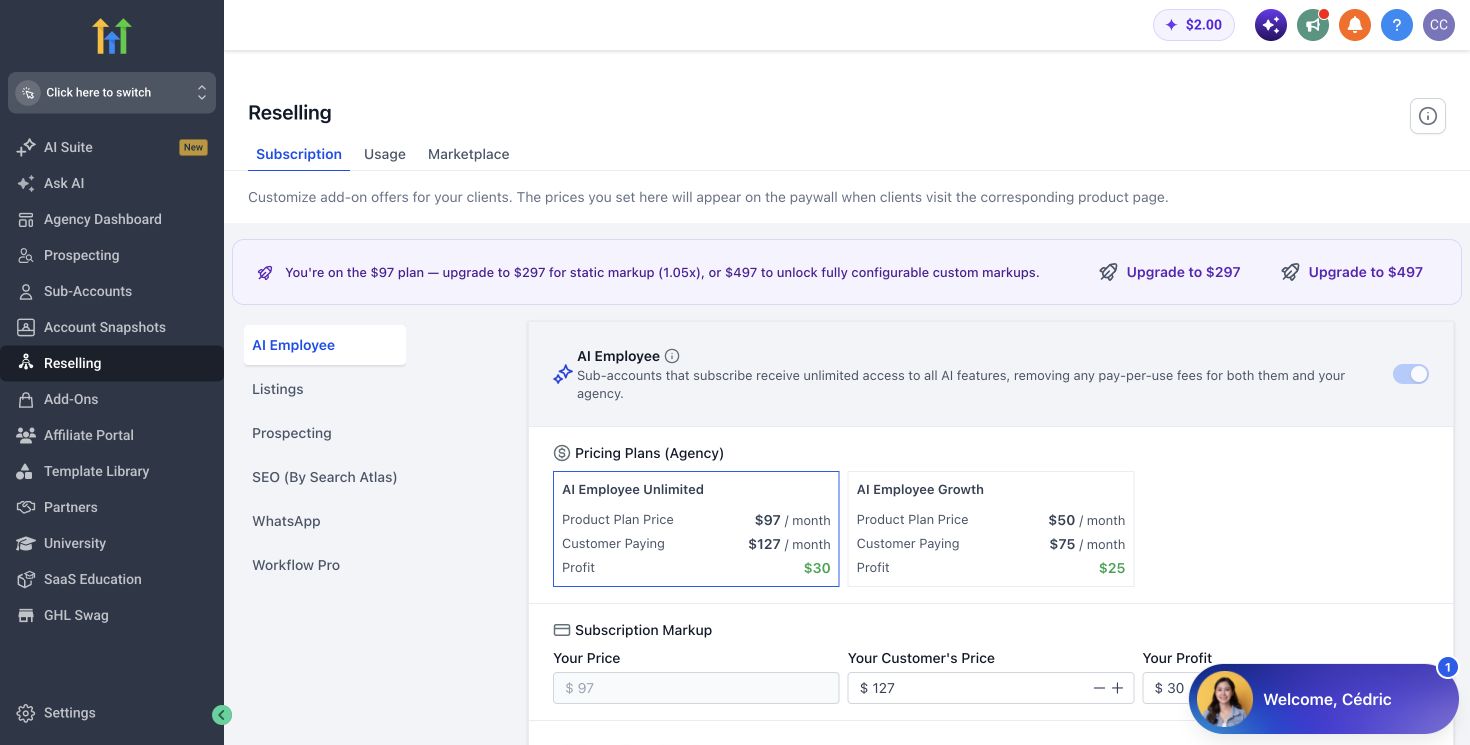
Rebilling separates who consumes a supported service from the agency wallet that initially funds it. Usage is attributed to the responsible sub-account and can be charged back through an eligible configuration. Unlimited is generally used to pass supported cost through at cost, while eligible Agency Pro and SaaS Mode configurations can apply a markup. Coverage varies by product, so verify the current pricing guide and the account interface rather than assuming every wallet item is rebillable.
Turn this part of the decision into a written acceptance test for “Can HighLevel rebill usage to clients?”. Record the baseline, expected change, named owner and evidence required to approve it. The test should cover activation, platform allocation, usage, payment fees, onboarding, support, retention and exit. Use representative records and normal operating volume, not an ideal demonstration account. Record assumptions separately from verified behaviour so a pricing or product change can be reviewed without rewriting the conclusion.
The trade-off
Before enabling it, write a usage policy the client can understand. Identify each metered channel or add-on, the billing unit, included allowance, markup or pass-through rule, billing frequency, taxes, spending limit, overage treatment and refund policy. Show where clients can see their consumption. A single software price described as all inclusive becomes misleading when normal messaging or AI activity creates a separate variable invoice.
Test the recommendation with a normal case, a high-volume case and one failure case. For this question, the review should include activation, platform allocation, usage, payment fees, onboarding, support, retention and exit. Assign every exception to a person, define the response time and preserve a safe manual route. Capture the actual time, cost and outcome. If the process succeeds only with builder intervention or perfect data, it is not ready for wider deployment.
How to decide
Test the money path end to end with a controlled sub-account. Generate known email, SMS, call or supported product usage, reconcile the wallet debit with the client charge and inspect rounding, timing and payment fees. Repeat the test after a plan change and with tax settings relevant to the customer. Export enough detail to answer a dispute without exposing another client's information.
How to decide
Design the failure path before relying on markup as revenue. Decide what happens when the client's card fails while the agency wallet continues paying, when consumption spikes, when a refund is requested or when a service retries automatically. Use alerts, reasonable limits and staged suspension so a technical loop cannot create unlimited agency exposure. Preserve essential access and data handling obligations even when a paid channel is paused.
How to decide
Measure collected rebilling revenue, underlying usage cost, payment fees, credits, bad debt and support time by account. Margin is collected revenue minus all of those costs, not the markup percentage displayed in configuration. Review high-variance accounts and cohorts monthly. If customers cannot predict the invoice or ordinary use destroys the package margin, replace the markup with a clearer allowance, capped overage or higher fixed tier.
How to verify this answer
What we checked
The answer is checked against the primary sources listed below and distinguishes published product facts from our operational judgement.
What can vary
Availability, limits, usage charges and interface details can vary by plan, country, account configuration and release date.
What to test yourself
Reproduce the recommendation with one representative workflow and your own data before changing a live system or buying annually.
Sources checked
Product capabilities and prices can change. These primary sources were checked for this analysis.
GHLFAQ