Setup
What is a HighLevel snapshot?
What a snapshot can package
Snapshots can package workflows, pipelines, forms, calendars, custom fields and other supported assets for reuse. Their value comes from standardising a tested service model, not from copying every asset in an agency account.
Turn this part of the decision into a written acceptance test for “What is a HighLevel snapshot?”. Record the baseline, expected change, named owner and evidence required to approve it. The test should cover data, domains, sender identity, users, workflows, acceptance tests and rollback. Use representative records and normal operating volume, not an ideal demonstration account. Record assumptions separately from verified behaviour so a pricing or product change can be reviewed without rewriting the conclusion.
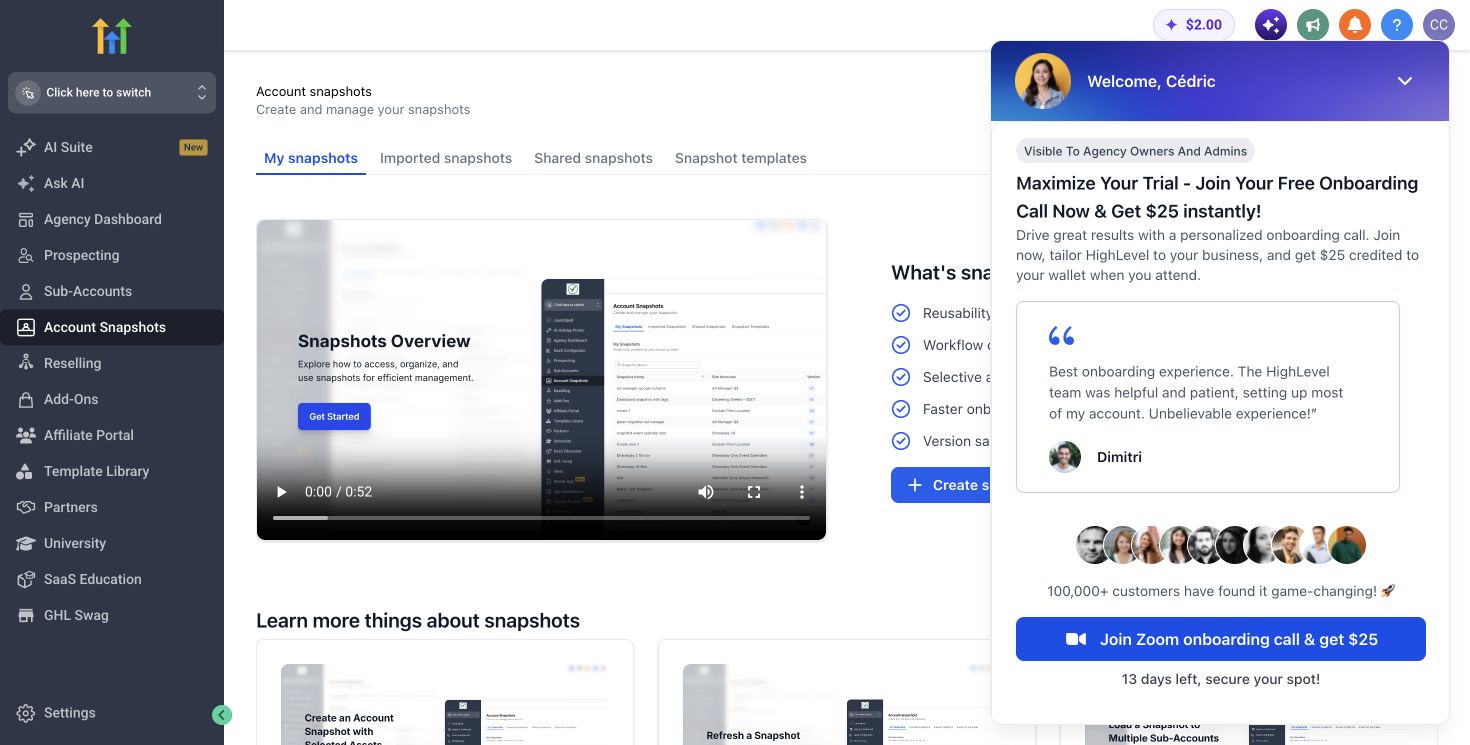
What still needs local configuration
A snapshot is not a finished client implementation. Domains, senders, phone numbers, calendars, users, integrations, compliance settings, consent language and client-specific content still require configuration. Mark every placeholder and local decision in an onboarding checklist.
Test the recommendation with a normal case, a high-volume case and one failure case. For this question, the review should include data, domains, sender identity, users, workflows, acceptance tests and rollback. Assign every exception to a person, define the response time and preserve a safe manual route. Capture the actual time, cost and outcome. If the process succeeds only with builder intervention or perfect data, it is not ready for wider deployment.
Version and test the template
Maintain a clean template account, semantic versions, release notes and automated or manual acceptance tests. Test new versions in a non-production sub-account with normal, missing-data and failure cases. Never edit the template and deploy widely without recording what changed.
Control rollout and rollback
Roll out to a small group, verify assets and workflows after loading and keep a rollback or repair plan. Define whether updates replace, merge or leave existing client assets untouched. A snapshot update must not silently overwrite local configuration or duplicate active automation.
Measure whether reuse creates value
Measure build time saved, defects, local rework, support questions and time to first value. Retire unused assets and split the template when different client types require incompatible journeys. Reuse creates value only when it reduces delivery effort without multiplying exceptions.
How to verify this answer
What we checked
The answer is checked against the primary sources listed below and distinguishes published product facts from our operational judgement.
What can vary
Availability, limits, usage charges and interface details can vary by plan, country, account configuration and release date.
What to test yourself
Reproduce the recommendation with one representative workflow and your own data before changing a live system or buying annually.
Sources checked
Product capabilities and prices can change. These primary sources were checked for this analysis.
GHLFAQ